
Eligibility & Insurance Verification is one of the most overlooked steps in the revenue cycle — most healthcare practices treat it as a quick front-desk formality, a box to check before the patient sees the provider. In reality, it’s one of the biggest drivers of claim denials in the entire revenue cycle. Industry data consistently shows that a large share of denied claims trace back to eligibility errors that could have been caught before the appointment ever happened.
In this guide, we break down what eligibility and insurance verification actually involves, why it matters more than most practices realize, and the five steps that keep denials from happening in the first place.
What Is Eligibility & Insurance Verification?
Eligibility and insurance verification is the process of confirming a patient’s active insurance coverage, plan benefits, copay and deductible amounts, and any prior authorization requirements before services are rendered. Done correctly, it tells your practice exactly what a payer will and won’t cover, what the patient will owe out of pocket, and whether any additional approval is needed before treatment.
This isn’t a one-time check. Coverage can change month to month — patients switch jobs, plans update their terms, deductibles reset — which means verification needs to happen close to the date of service, not just once when a patient is first added to your system.
Why Eligibility Verification Matters
- It’s the leading cause of denials. A large percentage of claim denials industry-wide are tied directly to eligibility issues — inactive coverage, wrong plan details, or missing authorization — not medical necessity or coding errors.
- It protects patient trust. Surprise bills caused by coverage mix-ups damage the patient relationship and increase collection difficulty after the fact.
- It speeds up reimbursement. Claims submitted with verified, accurate coverage information move through payer systems faster and with fewer holds.
- It reduces administrative rework. Every denial that could have been prevented at verification means extra staff time spent on appeals, resubmissions, and phone calls that shouldn’t have been necessary.
The Eligibility Verification Process: Step-by-Step
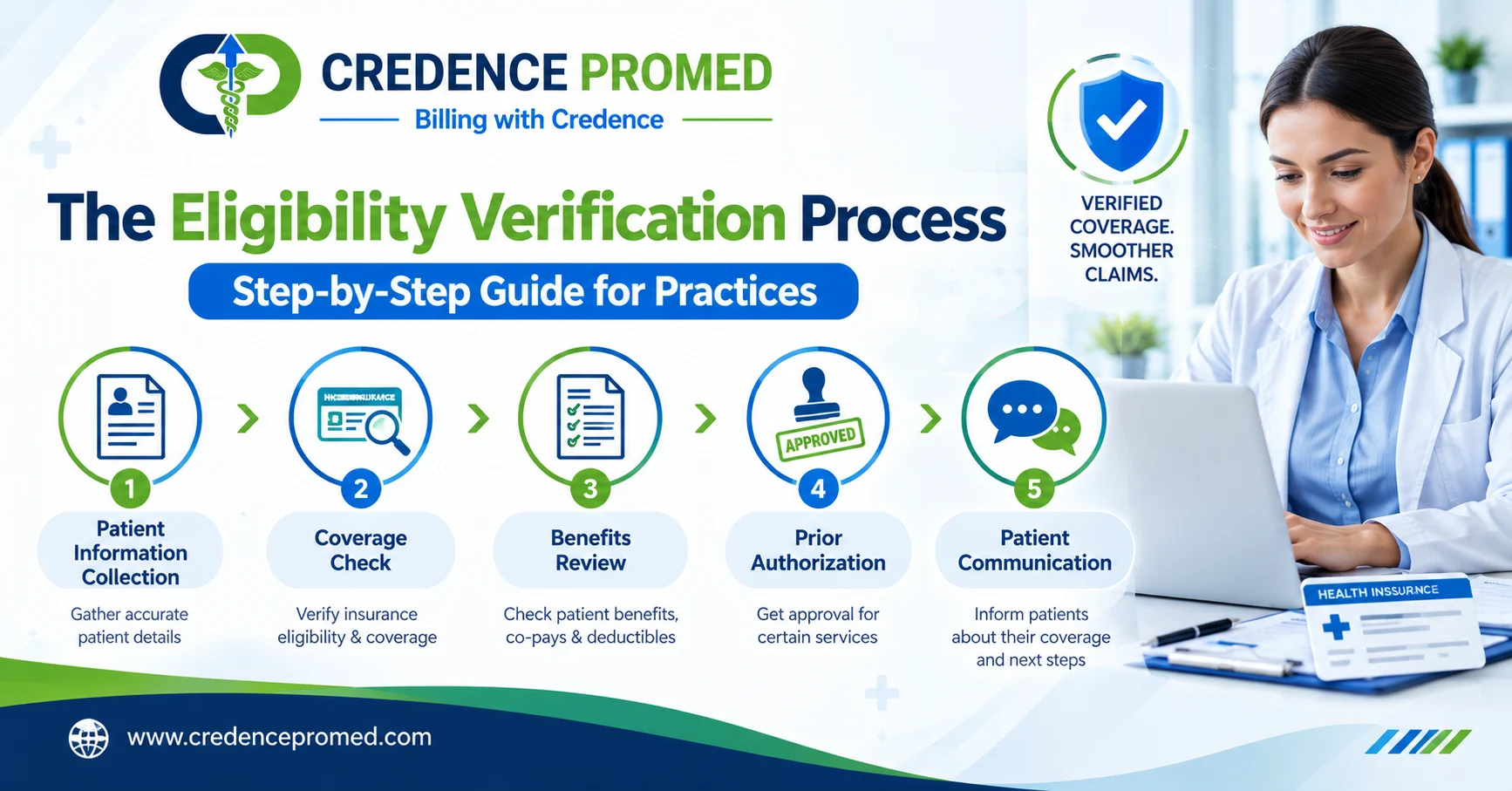
| Step | What Happens | When It Should Occur |
|---|---|---|
| 1. Collect Accurate Patient & Insurance Information | Gather full name, date of birth, insurance ID, group number, and payer details at scheduling | At time of scheduling |
| 2. Verify Active Coverage | Confirm the plan is active and effective for the date of service via payer portal or clearinghouse | 24–72 hours before appointment |
| 3. Check Plan-Specific Benefits | Review copay, coinsurance, deductible status, and covered vs. excluded services | Before appointment |
| 4. Confirm Prior Authorization Requirements | Identify whether the planned service or procedure requires payer pre-approval | Before appointment, with enough lead time for approval |
| 5. Communicate Patient Responsibility | Inform the patient of expected out-of-pocket costs before the visit | At check-in or prior to service |
Practices that build this into a routine workflow — rather than treating it as an afterthought — see measurably fewer denials and faster, cleaner reimbursement.
Common Mistakes That Lead to Denials
- Verifying coverage too far in advance — insurance details can change between scheduling and the actual appointment date, so a check done weeks ahead is often outdated by the time of service.
- Relying on the patient’s insurance card alone — cards don’t reflect real-time eligibility status or plan changes.
- Skipping prior authorization checks — services performed without required pre-approval are frequently denied outright, regardless of medical necessity.
- Not documenting the verification — without a clear record of what was confirmed and when, appeals become far harder to win.
- Treating verification as front-desk-only — without coordination between scheduling, billing, and clinical staff, details can fall through the cracks.
How Credence Promed Can Help
Credence Promed’s Eligibility & Insurance Verification service is built to catch coverage issues before they ever reach the claims stage. Here’s how our team supports your practice:
- Real-time eligibility checks — confirming active coverage and plan details close to the date of service, not weeks in advance
- Benefits breakdown — clarifying copay, deductible, and coinsurance details so your front desk can collect accurately at time of visit
- Prior authorization tracking — identifying and managing authorization requirements before they become denial reasons
- Seamless handoff into billing — verified information flows directly into claim submission, reducing back-and-forth and rework
- Fewer denials, faster payments — by catching issues upfront, your practice spends less time on appeals and more time getting paid on the first submission
Whether your practice handles high patient volume or specialty services with complex authorization requirements, Credence ProMed’s verification process is designed to protect your revenue cycle from the very first step.
Frequently Asked Questions
How far in advance should eligibility be verified? Ideally 24 to 72 hours before the appointment. Verifying too early risks missing coverage changes that occur closer to the visit.
What’s the difference between eligibility verification and prior authorization? Eligibility verification confirms a patient’s coverage is active and what it includes. Prior authorization is a separate approval some payers require before specific services or procedures will be covered.
Can eligibility verification really prevent most denials? Not all, but a significant share of denials stem directly from eligibility and authorization issues — meaning a strong verification process addresses the single largest denial category most practices face.
Who should be responsible for verification — front desk or billing team? Both should be involved. Front-desk staff typically collect and confirm patient information, while billing or a dedicated verification team confirms payer-side details and authorization requirements.
Does eligibility verification apply to returning patients too? Yes. Coverage can change at any time, so even established patients should be re-verified before each visit, not just new patients.
Key Takeaway
Eligibility and insurance verification isn’t a formality — it’s the first and most preventable checkpoint in your revenue cycle. Practices that build a consistent, close-to-visit verification process catch coverage problems before they turn into denied claims, protecting both revenue and the patient experience.
If your practice is dealing with frequent denials tied to coverage or authorization issues, a dedicated verification process can be one of the fastest ways to see measurable improvement in your collections.
📞 Get a Free Consultation Today!
Are you looking for reliable eligibility and insurance verification support? Contact Credence Promed today.
📞 Call us: 845-789-2849
📧 Email: info@credencepromed.com
🌐 Visit: www.credencepromed.com
