
Managing the revenue cycle of a healthcare practice is no easy task. Among the many challenges that medical billing professionals face, Accounts Receivable (A/R) follow-up is one of the most critical yet often overlooked processes.
If you’ve ever wondered what is A/R follow-up in medical billing and why it matters, this guide is for you. We’ll break down everything you need to know about medical billing A/R follow up, why it’s essential for your practice’s financial health, and how you can master it.

What Is A/R Follow-Up in Medical Billing?
A/R follow-up refers to the process of tracking and managing unpaid claims that have been submitted to insurance companies or patients. In simple terms, it’s the process of following up on accounts receivable to ensure that your practice gets paid for the services it provides.
When a claim is submitted, it doesn’t always get paid immediately. Insurance companies may delay, deny, or underpay claims. The A/R follow-up process involves:
- Identifying unpaid or underpaid claims
- Contacting insurance companies to check claim status
- Resolving denials and resubmitting claims
- Following up with patients for outstanding balances
Without a proper medical billing A/R follow up system, your practice can lose thousands of dollars in unpaid revenue.
Why Is A/R Follow-Up Important for Healthcare Practices?
1. Improves Cash Flow
A/R follow-up directly impacts your practice’s cash flow. The faster you collect payments, the more stable your revenue cycle becomes. Following revenue cycle best practices can help you avoid delays and improve financial performance. Delayed payments can disrupt operations, affect payroll, and limit your ability to invest in new equipment or staff.
2. Reduces Claim Denials
Many denials can be resolved through proper follow-up. When you have a dedicated revenue cycle management team that performs regular A/R follow-ups, they can identify denial patterns and correct them before they become recurring issues.
3. Prevents Revenue Leakage
Unpaid claims that are not followed up on can result in revenue leakage. Over time, these small amounts add up and significantly impact your bottom line.
4. Enhances Patient Satisfaction
Patients don’t like receiving surprise bills. By keeping your A/R follow-up process efficient, you can ensure that patient billing is accurate and timely, which leads to better patient satisfaction.
5. Supports Financial Reporting
Accurate A/R data helps you generate reliable financial reports. You can track your practice’s performance, identify trends, and make informed decisions about staffing, services, and growth.
Step-by-Step A/R Follow-Up Process
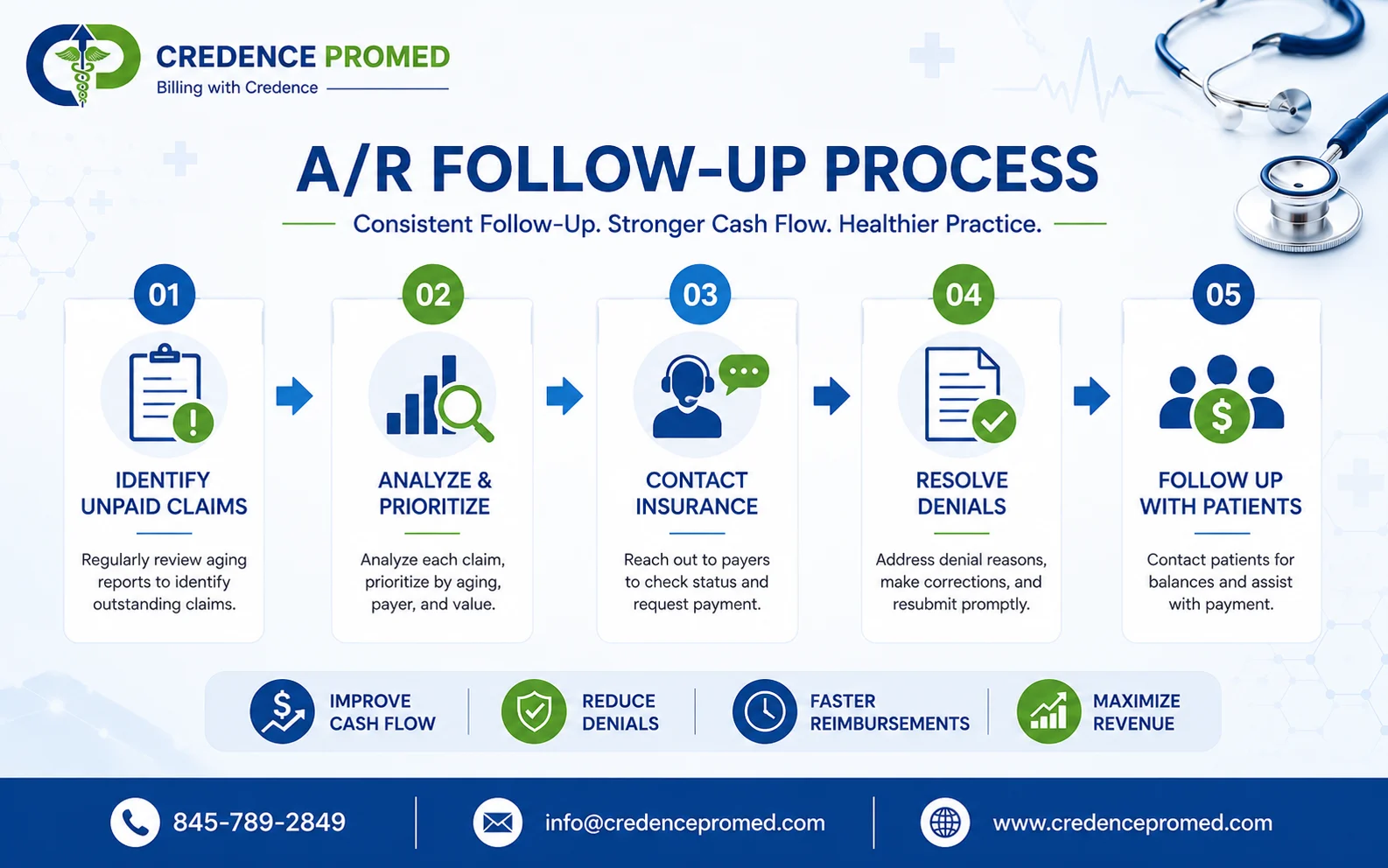
To master medical billing A/R follow up, you need a structured process. Here’s a step-by-step breakdown:
Step 1: Identify Unpaid Claims
Aging reports typically categorize unpaid claims by days past due:
- 0–30 days (Current)
- 31–60 days (Aging)
- 61–90 days (Aging)
- 91–120 days (Aging)
- 120+ days (Seriously Aging)
Step 2: Analyze and Prioritize
Not all unpaid claims are equal. Prioritize older claims (90+ days) first, as they are harder to collect. Also, focus on claims with high dollar amounts and frequent denials.
Step 3: Contact Insurance Companies
Once you’ve identified unpaid claims, contact the insurance payer to check the status.
You can stay updated with the latest CMS billing guidelines to ensure your claims meet compliance standards.
Ask for:
- Claim receipt confirmation
- Claim status (processed, pending, denied)
- Reason for denial (if applicable)
- Expected payment date
Step 4: Resolve Denials
If a claim is denied, the denial management team must investigate the root cause. Common denial reasons include:
- Incorrect patient information
- Missing prior authorization
- Coding errors
- Medical necessity issues
Once the issue is resolved, the claim is resubmitted.
Step 5: Follow Up with Patients
For claims that are the patient’s responsibility (co-pays, deductibles, etc.), send clear and timely patient statements. Offer flexible payment options to make it easier for patients to pay.
Step 6: Track and Report
Regularly monitor your A/R metrics:
- Days in A/R: Average number of days it takes to get paid
- A/R Over 90 Days: Percentage of claims older than 90 days
- Denial Rate: Percentage of claims denied
These metrics help you measure the effectiveness of your RCM services and identify areas for improvement.
Common Challenges in A/R Follow-Up
| Challenge | Why It Happens | Solution |
|---|---|---|
| Claim Denials | Errors in coding, missing information | Invest in denial management services |
| Payer Delays | Insurance companies take time to process | Regular follow-ups with payers |
| Staff Shortage | Not enough team members to handle follow-ups | Outsource to a medical billing company |
| Manual Processes | Spreadsheets and manual tracking are error-prone | Use automated billing software |
| Patient Non-Payment | Patients don’t understand their bills | Send clear statements and offer payment plans |
Outsourcing your A/R follow-up to a professional medical billing services provider like Credence Promed can help you overcome these challenges efficiently.
Best Practices for Effective A/R Follow-Up
1. Perform Regular Aging Report Reviews
Review your aging report every week. This helps you identify unpaid claims early and take action before they become too old to collect.
2. Automate Where Possible
Use medical billing software that automates claim tracking, reminders, and follow-up tasks. Tools like medical billing software can help you save time and reduce manual errors. Automation reduces errors and saves time.
3. Train Your Team
Ensure your billing team is well-trained in insurance rules, coding guidelines, and communication skills. Regular training keeps them up-to-date with industry changes.
4. Use Data Analytics
Analyze denial trends and payer behavior. If a particular insurance company consistently denies certain types of claims, address the root cause.
5. Outsource When Needed
If you’re struggling to manage A/R follow-up in-house, consider outsourcing medical billing to a trusted partner. This allows you to focus on patient care while experts handle your revenue cycle.
How Credence Promed Can Help
At Credence Promed, we specialize in revenue cycle management and medical billing A/R follow up. Our team of experts handles everything from claim submission and denial management to payment posting and patient follow-up.
We use the latest technology and proven strategies to:
- Reduce days in A/R
- Improve cash flow
- Minimize claim denials
- Ensure timely payments
Whether you need help with insurance eligibility verification, prior authorization, or A/R follow-up, we’re here to support you.
Frequently Asked Questions (FAQ)
Q1. What is A/R follow-up in medical billing?
A/R follow-up is the process of tracking unpaid claims and following up with insurance companies and patients to ensure timely payment.
Q2. Why is A/R follow-up important?
It improves cash flow, reduces denials, and prevents revenue leakage.
Q3. How can I improve my A/R follow-up process?
Regularly review aging reports, train your staff, use automation, and consider outsourcing.
Q4. What is a good days in A/R metric?
For medical practices, a good target is 30–40 days. Anything higher indicates potential issues.
Q5. Can I outsource A/R follow-up?
Yes! Outsourcing to a medical billing company like Credence Promed is a smart way to ensure efficient A/R management.
Conclusion
Understanding what is A/R follow-up in medical billing is essential for any healthcare provider looking to maintain a healthy revenue cycle. By implementing a structured A/R follow-up process, you can reduce denials, improve cash flow, and ensure your practice’s financial stability.
If you’re struggling with A/R follow-up or want to improve your revenue cycle management, contact Credence Promed today. Let our experts help you get paid faster and focus on what truly matters—patient care.
📞 Get a Free Consultation Today!
Are you looking for professional medical billing A/R follow up services? Contact Credence Promed for a free consultation.
👉 Call us: [845-789-2849]
👉 Email us: [info@credencepromed.com]
👉 Visit: www.credencepromed.com

One Response